
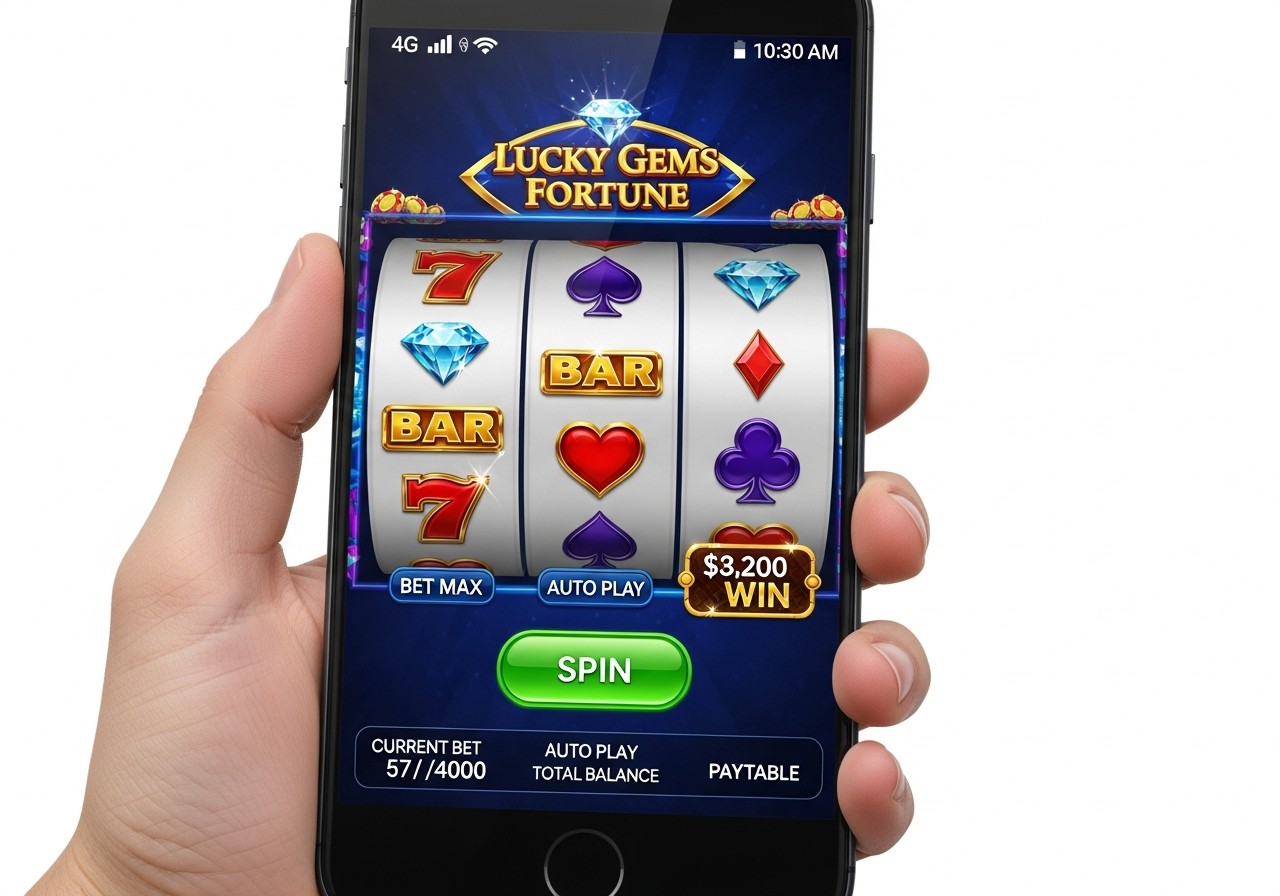
In Ghana, the vast majority of online casino players spin 3D slots on their mobile phones using 4G networks. Unlike streaming a video or browsing social media, slot games demand consistent speeds, low latency, and stable packet delivery to render high-quality graphics, trigger animations smoothly, and ensure every spin registers without delay. When loading times stretch beyond a few seconds or gameplay stutters, trust erodes quickly—players worry whether their bets are registering correctly or if a win might be lost to a dropped connection.
Ghana’s mobile internet landscape has matured significantly, with average 4G download speeds hovering in the mid-teens to low-20 Mbps range and latency typically between 120 and 140 milliseconds. While these figures are adequate for many everyday tasks, 3D slots with their rich textures, real-time RNG calculations, and interactive bonus rounds place unique demands on your connection. This article dives into the data-backed reality of playing real money slots on 4G in Ghana, comparing network performance across major providers, device configurations, and usage scenarios to help you optimise your mobile casino experience.
How Fast Is 4G Internet in Ghana Right Now?
Ghana’s 4G networks deliver average download speeds of approximately 18 to 21 Mbps, with upload speeds ranging from 13 to 15 Mbps and ping times typically between 125 and 140 milliseconds. These benchmarks place the country in the mid-tier globally, comfortably above the 5 to 10 Mbps sustained download speed that most 3D slot games require for smooth initial loading and gameplay. However, real-world performance varies significantly by location, time of day, and network congestion, meaning that the same connection can feel snappy in the early morning but sluggish during evening peak hours.
For 3D slots, the headline download speed is only part of the story. Latency—the time it takes for a data packet to travel from your phone to the casino server and back—matters just as much, because every tap on the spin button triggers a round-trip request to verify your balance, execute the RNG calculation, and return the result. A ping above 150 ms can introduce perceptible delays, making animations feel laggy and undermining the seamless experience that modern slot engines are designed to deliver. Equally important is packet loss and jitter: even brief interruptions can cause a spin to freeze or require a page refresh, costing both data and player confidence.
Understanding where your connection sits relative to these thresholds helps set realistic expectations. If you’re consistently seeing 20 Mbps down and 130 ms ping, most 3D slots will load in under ten seconds on first launch and feel responsive during play. Drop below 10 Mbps or exceed 150 ms latency, and you’ll notice longer waits, occasional stutters, and a higher risk of session interruptions—especially when the network is under heavy load.
| Connection type / ISP | Average download (Mbps) | Average upload (Mbps) | Average ping (ms) | Typical use case |
|---|---|---|---|---|
| Ghana 4G mobile (aggregate) | 18–21 | 13–15 | 125–140 | Smooth 3D slot play, moderate initial load |
| Home WiFi (fibre/LTE) | 25–50 | 10–20 | 80–110 | Fastest initial loads, stable gameplay |
| 3G fallback | 2–5 | 1–3 | 200–350 | Slow loads, frequent stutters, not ideal for 3D slots |
| 5G trial zones (Accra CBD) | 80–150 | 30–60 | 40–70 | Near-instant slot loads, ultra-low latency |
Average 4G Mobile Speeds by Major Providers in Ghana
Performance across Ghana’s mobile operators is broadly similar, but nuances in network investment, spectrum allocation, and tower density mean that your experience with MTN, Vodafone, AirtelTigo, or a niche LTE provider can differ. MTN typically posts the highest average 4G download speeds—often touching 22 Mbps in urban centres—thanks to extensive infrastructure rollout and efficient backhaul. Vodafone follows closely, with reliable 18 to 20 Mbps downloads and competitive latency figures. AirtelTigo and smaller providers generally deliver 15 to 18 Mbps, which remains more than adequate for 3D slots but may suffer slightly more congestion during peak hours.
Ping times are equally important for real money gaming. MTN and Vodafone both average around 125 to 135 ms in well-covered areas, ensuring that each spin registers promptly. AirtelTigo users sometimes see pings climb toward 140 to 150 ms, introducing marginal but noticeable delays during rapid-fire bonus rounds. Upload speeds are less critical for slots—most of your traffic is downloading textures and receiving game state updates—but a healthy 12 to 15 Mbps upload ensures that bet confirmations and account authentication happen without hiccups.
| Mobile operator | 4G download (Mbps) | 4G upload (Mbps) | Ping (ms) | Notes for gaming |
|---|---|---|---|---|
| MTN Ghana | 20–22 | 14–16 | 125–135 | Best overall for slots; stable in peak hours |
| Vodafone Ghana | 18–20 | 13–15 | 130–140 | Reliable, good coverage in cities |
| AirtelTigo | 15–18 | 11–13 | 135–150 | Adequate; may lag slightly during congestion |
| Surfline / Busy 4G LTE | 12–16 | 8–12 | 140–160 | Coverage limited; good as WiFi alternative at home |
City vs Regional Performance for 4G Gaming
Major urban centres like Accra and Kumasi benefit from dense tower infrastructure, multiple-carrier competition, and fibre backhaul that keeps 4G performance consistently above the national average. Players in these cities can expect download speeds at the higher end of the 18 to 22 Mbps range and latency comfortably under 140 ms, even during moderately busy periods. This translates to 3D slot initial load times of eight to twelve seconds and smooth, responsive gameplay once the game assets are cached.
In contrast, regional towns and rural areas often see slower speeds, higher latency, and greater variability. A 4G connection in a town outside the Greater Accra or Ashanti regions might deliver only 10 to 15 Mbps with ping times edging toward 160 ms, especially if the nearest tower serves a large catchment area. During peak evening hours, congestion can push speeds below 8 Mbps, causing 3D slots to load slowly or suffer mid-game interruptions. For players in these areas, selecting a lighter 2D slot variant or scheduling sessions during off-peak hours can significantly improve the experience.
What 3D Slots Need From Your Connection
Modern 3D slot games are far more demanding than their classic fruit-machine predecessors. Each title bundles high-resolution textures, animated characters, particle effects, dynamic soundscapes, and real-time communication with an RNG server to ensure fairness and synchronise your balance. To deliver this experience seamlessly, a 3D slot requires a steady download speed of at least 5 to 10 Mbps, latency below 150 milliseconds, and minimal packet loss to avoid freezes or disconnections.
Why does latency matter so much for an RNG game? Every time you tap the spin button, your device sends a bet request to the casino server, which validates your balance, generates a provably fair random outcome, logs the transaction, and streams back the result along with instructions for which symbols to display and which animations to trigger. If your ping is high or jitters unpredictably, this round-trip can stretch from a fraction of a second to a noticeable delay, breaking immersion and raising doubts about whether the spin registered correctly. Reliable packet delivery ensures that no part of this exchange is lost or requires retransmission, keeping gameplay fluid and trustworthy.
- Steady download bandwidth (5–10 Mbps minimum): Initial game load pulls down texture atlases, audio files, and the game engine itself—often 10 to 30 MB depending on the slot’s complexity. Once cached, ongoing play consumes far less, but you still need consistent throughput to stream updated promotional assets or load new bonus stages.
- Low latency (under 150 ms preferred): Each spin involves multiple server round-trips. Lower ping means faster response times, reducing the delay between your tap and the reels starting to spin, which is critical for maintaining the rhythm and excitement of rapid play.
- Minimal packet loss and jitter: Even a 1–2% packet loss rate can cause visible stutters, force retransmissions, or disconnect your session mid-spin. Jitter—variability in ping—makes animations feel jerky and unpredictable, undermining the polished experience that 3D slots are designed to deliver.
- Stable connection during peak hours: Network congestion in the evening can double your effective latency and halve your available bandwidth. A connection that feels perfect at 10 a.m. might struggle at 8 p.m., so understanding your network’s behaviour across the day helps you plan sessions when performance is most reliable.
Core Network Metrics That Affect 3D Slot Loading
To optimise your mobile casino experience, it helps to understand which specific network metrics govern each stage of gameplay. Download speed, upload speed, latency, and packet integrity each play distinct roles, and a weakness in any one area can bottleneck the entire experience even if the others are strong.
- Download throughput: Governs how quickly the game’s initial asset bundle—textures, animations, sound files—reaches your device. A 20 Mbps connection can pull down a 15 MB slot game in roughly six seconds under ideal conditions, whereas 10 Mbps doubles that time. Subsequent spins rely on cached assets, so download speed matters most on first load or when switching to a new game.
- Latency (ping): Controls the delay between your input and the server’s acknowledgment. For 3D slots, every spin involves at least two round-trips: one to validate your bet and trigger the RNG, another to confirm the result and update your balance. At 130 ms ping, these exchanges add roughly a quarter-second of delay; at 200 ms, half a second or more, which players perceive as sluggishness.
- Packet loss and retransmission rate: When data packets are dropped, your device must request retransmission, introducing delays and causing animations to stutter or freeze. Even a 1% loss rate can disrupt the seamless flow of a 3D slot, while 3–5% makes gameplay frustrating and unreliable.
- Upload bandwidth: Although slots are download-heavy, your device continuously sends bet confirmations, session heartbeats, and analytics data upstream. A minimum of 5 Mbps upload ensures these small packets reach the server without queuing delays, which is especially important during bonus rounds when multiple actions fire in quick succession.
How 4G Metrics Translate Into Real 3D Slot Loading Times
Knowing the theory is one thing; understanding how Ghana’s typical 4G speeds translate into actual wait times and gameplay quality is another. A player on MTN’s 20 Mbps 4G in Accra will experience an initial load of roughly eight to ten seconds for a feature-rich 3D slot, followed by near-instant subsequent spins once assets are cached. Switch to a congested AirtelTigo connection delivering only 12 Mbps with 150 ms ping, and that same game might take fifteen to eighteen seconds to load, with occasional half-second hiccups during bonus animations.
Peak-hour congestion is the biggest wildcard. Between 7 p.m. and 10 p.m., when much of Ghana is streaming video, browsing social media, and gaming, effective speeds can drop by 30 to 50 percent and latency can spike by 40 ms or more. A connection that benchmarks at 18 Mbps and 130 ms in the morning might fall to 10 Mbps and 180 ms in the evening, pushing 3D slot load times past twenty seconds and introducing noticeable input lag. For serious players, avoiding peak hours or switching to a home WiFi connection during those windows can make a substantial difference.
| Network profile | Download / upload | Latency | Estimated initial load (s) | In-game experience |
|---|---|---|---|---|
| Optimal 4G (MTN/Vodafone, off-peak) | 20 / 14 Mbps | 125 ms | 8–10 | Smooth, responsive; no noticeable lag |
| Average 4G (any carrier, midday) | 18 / 13 Mbps | 135 ms | 10–12 | Good; minor delays on complex animations |
| Congested 4G (peak evening) | 10 / 8 Mbps | 175 ms | 15–20 | Noticeable lag, occasional stutters |
| Weak 4G / 3G fallback | 5 / 2 Mbps | 250 ms | 25–35 | Slow, unreliable; frequent freezes |
First Load vs Cached Load: Why Your Second Spin Feels Faster
The first time you launch a 3D slot, your browser or casino app must download the entire game package—graphics, audio, animations, and the engine code itself—from the casino’s content delivery network. On a typical Ghana 4G connection, this initial download can take anywhere from eight to twenty seconds depending on the game’s size and your current network conditions. However, modern browsers and apps cache these assets locally on your device, so when you return to the same slot later in your session, load times drop dramatically to just two to five seconds.
This caching mechanism is why your second, third, and subsequent spins feel almost instant: the heavy lifting has already been done, and only lightweight data—your current balance, the RNG result, and any updated promotional banners—needs to travel over the network. To maximise this benefit, avoid clearing your browser cache between sessions, and consider using a dedicated casino app rather than a mobile web browser, as apps typically retain cached assets more aggressively. If you play the same handful of favourite slots regularly, you’ll spend far less time waiting and far more time spinning.
Impact of Peak-Hour Congestion on Loading Speeds
Network performance in Ghana follows a predictable daily rhythm, with speeds peaking in the early morning and late night, then sagging during the evening rush. Understanding this pattern and adjusting your play schedule accordingly can dramatically improve your 3D slot experience.
- Evening slowdown (7–10 p.m.): This is when the majority of Ghanaians are online, streaming videos, gaming, and browsing. Expect effective speeds to drop by 30 to 50 percent and latency to climb by 30 to 50 ms. A game that loads in ten seconds at midday might take eighteen seconds at 8 p.m., and you may notice stuttering during bonus rounds.
- Lunchtime dip (12–2 p.m.): A smaller but noticeable slowdown occurs during the lunch hour as people check social media and stream content. Performance typically remains acceptable for 3D slots but won’t match the speeds you see in the early morning.
- Optimal windows (6–9 a.m., 11 p.m.–1 a.m.): Network load is lightest early in the morning and late at night. If you have flexibility in your schedule, these windows offer the fastest loads, lowest latency, and most stable gameplay—ideal for high-stakes sessions or exploring graphically intensive new releases.
- Weekend variability: Saturdays and Sundays see more consistent daytime usage, so the midday performance dip can extend from late morning through early evening. Plan longer sessions for weekend mornings or late nights to avoid the worst congestion.
3D Slots on Different Ghanaian Connections: 4G vs WiFi vs 5G
While 4G mobile data is the dominant way Ghanaians access online casinos, it’s not the only option. Home WiFi—whether delivered via fibre, fixed LTE, or satellite—and emerging 5G trial zones each offer distinct trade-offs in speed, latency, cost, and coverage. Choosing the right connection type for your gaming habits can mean the difference between a frustrating, laggy experience and smooth, reliable play.
WiFi connections, particularly those backed by fibre or dedicated LTE home routers, typically deliver higher speeds and lower latency than mobile 4G, making them ideal for long sessions or graphically demanding slots. However, they lack mobility and are only available where infrastructure has been deployed. 5G, though still limited to pilot zones in Accra’s central business district, offers transformative performance with sub-50 ms latency and download speeds exceeding 100 Mbps—effectively eliminating loading times and lag. For now, most players will rely on 4G, balancing speed, cost, and the convenience of playing anywhere.
| Connection type | Typical speed range | Typical ping | 3D slot loading time | Pros for gaming | Cons for gaming |
|---|---|---|---|---|---|
| 4G mobile | 15–22 Mbps | 125–150 ms | 8–15 s | Portable, widely available, pay-as-you-go flexibility | Congestion in peak hours, higher latency than WiFi |
| Home WiFi (fibre) | 30–100 Mbps | 60–90 ms | 4–8 s | Fast, stable, low latency, unlimited data | Fixed location, higher upfront cost, limited coverage |
| Fixed LTE (Surfline, Busy) | 12–25 Mbps | 100–130 ms | 8–12 s | Good alternative where fibre unavailable, stable at home | Still subject to congestion, slower than fibre |
| 5G trial (Accra CBD) | 80–150 Mbps | 40–70 ms | 2–4 s | Ultra-fast, near-zero lag, future-proof | Very limited coverage, higher cost, few compatible devices |
When to Choose WiFi Over 4G for Slot Sessions
If you have access to a reliable home WiFi connection—especially one backed by fibre or a quality fixed-LTE provider—it’s almost always the better choice for extended 3D slot sessions. WiFi typically delivers 30 to 100 Mbps download speeds with latency in the 60 to 90 ms range, cutting initial load times in half and virtually eliminating the stuttering or freezes that can plague mobile data during peak hours. Because most home broadband plans in Ghana offer generous or unlimited data allowances, you can play without worrying about burning through your monthly bundle or incurring overage charges.
However, WiFi isn’t always practical. If you play on your commute, during lunch breaks, or while traveling, 4G remains the only viable option. In those cases, choosing the right mobile operator, monitoring your signal strength, and scheduling play during off-peak windows will help you get the best possible experience on the go. For high-stakes sessions or when exploring a new, graphically intensive slot, consider waiting until you’re on WiFi to avoid the risk of a disconnect mid-bonus round.
Network-Specific Considerations: MTN, Vodafone and Niche Providers
Each of Ghana’s mobile networks has its own strengths, weaknesses, and quirks that can affect your 3D slot experience. While the broad performance figures are similar across carriers, subtle differences in tower placement, spectrum holdings, and traffic management policies mean that one network might excel in your neighbourhood while another struggles.
- MTN Ghana: The market leader boasts the widest 4G coverage and highest average speeds, making it the top choice for mobile casino play. MTN’s network handles peak-hour congestion better than competitors, and its APN settings are generally optimised out of the box. If you experience slow speeds, try switching APN to “internet” rather than any carrier-branded portal APN.
- Vodafone Ghana: Offers competitive speeds and excellent urban coverage, particularly in Accra and Kumasi. Latency is slightly higher than MTN but still comfortably under 150 ms in most scenarios. Vodafone’s prepaid data bundles often provide better value for heavy users, making it a solid choice if you play multiple hours per week.
- AirtelTigo: Delivers adequate performance for 3D slots but can struggle during peak hours, especially outside major cities. Ping times occasionally creep above 150 ms, introducing perceptible input lag. If AirtelTigo is your primary network, consider playing during morning or late-night windows to avoid congestion, or test a competitor’s SIM to compare performance in your area.
- Surfline and Busy 4G/LTE: These fixed-wireless providers are designed for home use rather than mobile gaming, but if you have one of their routers, they can serve as a stable platform for slots when you’re at home. Speeds are generally lower than fibre but higher than congested mobile 4G during peak hours, and latency sits in the 100 to 130 ms range—acceptable for most 3D slots.
APN Settings and Quality-of-Service Tweaks
Most Ghanaian players never touch their Access Point Name (APN) settings, but a quick adjustment can sometimes unlock better performance for gaming. The default APN assigned by your carrier is often optimised for general web browsing and social media rather than low-latency applications like real money slots. Switching to a simpler APN—such as “internet” on MTN or “browse” on Vodafone—can reduce routing overhead and shave 10 to 20 ms off your ping.
To change your APN on Android, navigate to Settings > Network & Internet > Mobile Network > Advanced > Access Point Names, then select or create a new APN with the simplified name provided by your carrier’s support documentation. On iOS, you may need to install a carrier configuration profile. While the improvement is modest, every millisecond counts when you’re chasing a progressive jackpot or navigating a timed bonus round, and this five-minute tweak costs nothing to try.
Signal Strength and Tower Proximity
Even the best network delivers poor performance if your signal strength is weak. In Ghana’s cities, 4G towers are dense enough that most players enjoy three or four bars of signal indoors, but in regional areas or inside concrete buildings, signal can drop to one or two bars, severely degrading speeds and increasing packet loss. If you consistently experience slow slot loading despite being on a reputable carrier, check your signal indicator and consider moving closer to a window, stepping outside, or switching to WiFi.
Some advanced users invest in a mobile signal booster—a small antenna and amplifier that can double or triple indoor signal strength for a few hundred cedis. For casual players, this is overkill, but if you play regularly from a location with marginal coverage, a booster can transform a frustrating experience into a smooth one.
Device Performance: Phone, Browser and Casino App Impact
Your network speed is only half the equation; the device you’re playing on and the software environment—browser versus app, Android versus iOS, entry-level versus flagship—also significantly influence 3D slot loading times and gameplay smoothness. A mid-range phone from 2022 on a decent 4G connection will outperform a budget 2019 device on the same network because the newer phone can decode textures faster, render animations more fluidly, and cache assets more efficiently.
Browser choice matters, too. Chrome and Safari are optimised for modern web standards and hardware acceleration, ensuring that 3D slots leverage your phone’s GPU for smooth rendering. Older or niche browsers may lack these optimisations, forcing your CPU to do the heavy lifting and introducing stutter even when your network is performing well. Dedicated casino apps often load faster and play more smoothly than browser-based slots because they preload common assets and bypass some of the overhead inherent in web rendering, though they do consume more storage space on your device.
| Factor | Example (low vs mid vs high-end) | Effect on 3D slot loading | Recommended optimisation |
|---|---|---|---|
| Device CPU/GPU | Entry: Snapdragon 450 | Mid: MediaTek G85 | High: Snapdragon 8 Gen | Low-end: +3–5 s load, stutters | Mid: smooth | High: near-instant | Close background apps; consider 2D slots on old devices |
| RAM availability | 2 GB | 4 GB | 8 GB+ | Low: frequent cache eviction, re-downloads | High: assets stay cached | Clear RAM before long sessions; use casino app for better caching |
| Browser / app | Chrome / Safari | Firefox | Dedicated casino app | Chrome/Safari: fast, hardware-accelerated | App: fastest, best caching | Use Chrome or Safari on web; install app for regular play |
| Operating system | Android 9 | Android 12 | iOS 15+ | Newer OS: better memory management, faster web engines | Update OS when possible; disable battery-saver during play |
| Storage space | Less than 1 GB free | 5 GB+ free | Low: system slows cache writes, forces re-downloads | Free up 5 GB minimum; uninstall unused apps |
App vs Browser: Which Loads 3D Slots Faster?
Dedicated casino apps generally offer a smoother, faster experience than playing the same slots in a mobile browser. Apps can preload common game assets—sound effects, UI elements, even entire game engines—during installation or background updates, so when you tap a slot title, much of the heavy lifting is already done. This cuts initial load times by 20 to 40 percent compared to a cold browser launch. Apps also maintain more aggressive caching policies, keeping your favourite slots’ assets in local storage between sessions so subsequent loads feel nearly instant.
However, apps do have trade-offs. They occupy 50 to 150 MB of storage space on your device, which can be a constraint on budget phones with only 16 or 32 GB of internal memory. They also require periodic updates, consuming additional data. For players who visit multiple casinos or only play occasionally, a mobile browser offers flexibility without the storage overhead. For regulars who stick to one or two casinos and play several times per week, installing the app is almost always worth it for the performance gains alone.
Data Usage of 3D Slots on 4G in Ghana
Data consumption is a top concern for Ghanaian players on prepaid or capped mobile plans. A typical 3D slot session consumes between 15 and 40 MB per hour once the game is loaded and cached, though the initial download can add another 10 to 30 MB depending on the complexity of the slot. Over a month, a player enjoying three one-hour sessions per week might use 200 to 400 MB of data solely on slots—a meaningful chunk of a 2 or 5 GB monthly bundle.
The good news is that data usage drops sharply after the first load. When you launch a 3D slot for the first time, your device downloads all the textures, animations, and audio files in one go. Subsequent sessions pull only updated balance information, RNG results, and any new promotional content, which is far lighter. If you play the same handful of slots regularly and avoid clearing your browser cache, your effective hourly data consumption can fall to just 10 to 15 MB. For players on tight budgets, this makes sticking to a curated list of favourite games a smart data-saving strategy.
Estimating Your Monthly 3D Slot Data Budget
To plan your data usage effectively, it helps to map out how many sessions you play per week, how long each lasts, and whether you’re trying new slots or replaying favourites. A casual player spinning a few rounds during commutes will use far less data than someone enjoying multi-hour weekend sessions exploring new releases.
| Session type | Approx. spins per hour | Estimated data per hour | Estimated monthly data (3 sessions/week) | Suggested bundle size |
|---|---|---|---|---|
| Casual (same 2–3 slots, cached) | 30–50 | 10–15 MB | 120–180 MB | 1–2 GB (shared with other apps) |
| Regular (mix of cached & new slots) | 60–100 | 20–30 MB | 240–360 MB | 2–5 GB |
| Heavy (exploring new releases) | 100–150 | 35–50 MB | 420–600 MB | 5–10 GB |
Data-Saving Tips for Mobile Slot Players
If you’re on a limited data plan, a few simple habits can stretch your bundle significantly further without sacrificing gameplay quality. The single most effective strategy is to stick to a small rotation of favourite slots rather than sampling new titles every session, because each new game requires a full asset download whereas cached games consume minimal data. Beyond that, disabling auto-play of promotional videos on the casino lobby, avoiding high-resolution graphics settings if your casino offers a quality toggle, and scheduling your heaviest sessions for when you have WiFi access all contribute to keeping data usage under control.
Another often-overlooked tip: close background apps before launching a slot session. Apps running in the background can silently consume data for updates, syncing, and notifications, inflating your overall usage even though the slot itself is relatively efficient. A quick swipe through your recent apps list before you start playing ensures that every megabyte of your bundle is going toward the game, not toward updating social media feeds you’re not even looking at.
Practical Checklist to Optimise 3D Slot Loading on 4G in Ghana
Bringing together network selection, device tuning, and smart usage habits, here’s a step-by-step checklist to ensure you’re getting the best possible 3D slot performance on Ghana’s 4G networks. Each action takes only a minute or two but can shave seconds off load times, reduce lag, and prevent frustrating mid-session disconnections.
- Choose the right carrier and plan: Test MTN, Vodafone, and AirtelTigo SIMs in your most common play locations to identify which delivers the best speeds and lowest latency. Purchase a data bundle sized to your monthly slot usage—typically 2 to 5 GB for regular players—to avoid expensive out-of-bundle rates.
- Optimise your APN settings: Switch to a simplified APN like “internet” (MTN) or “browse” (Vodafone) to reduce routing overhead and lower ping by 10 to 20 ms. Consult your carrier’s support page for the correct configuration, and test before and after to confirm the improvement.
- Play during off-peak hours when possible: Schedule longer or high-stakes sessions for early morning (6–9 a.m.) or late night (11 p.m.–1 a.m.) to take advantage of the lightest network congestion and fastest speeds. If you must play during peak evening hours, expect slower loads and occasional stutters.
- Use a dedicated casino app instead of a browser: If you play at one or two casinos regularly, install their official apps to benefit from preloaded assets, aggressive caching, and faster load times. Apps typically cut initial slot loading by 20 to 40 percent compared to mobile web browsers.
- Close background apps and free up storage: Before launching a slot session, swipe away unused apps to free up RAM and ensure your device isn’t competing for bandwidth with background updates. Maintain at least 5 GB of free storage so your operating system can efficiently cache slot assets between sessions.
- Monitor signal strength and move if needed: Check your signal indicator before starting a session. If you’re down to one or two bars, move closer to a window, step outside, or switch to WiFi if available. Weak signal dramatically increases latency and packet loss, degrading gameplay even if your network’s headline speeds are good.
- Stick to a curated list of favourite slots: Playing the same handful of games repeatedly maximises cache efficiency, cutting data usage by up to 70 percent compared to constantly trying new titles. Save exploration of new releases for when you’re on WiFi or have data to spare.
Quick Troubleshooting: When Your 3D Slot Won’t Load Smoothly
Even with an optimised setup, you’ll occasionally hit a session where a slot loads slowly or stutters during play. Before assuming your network is at fault, run through these quick checks. First, restart your browser or app—cached errors or memory leaks can accumulate over long sessions, and a fresh start often resolves stuttering instantly. Second, toggle airplane mode on and off to force your device to reconnect to the nearest tower, which can clear temporary routing issues or switch you from a congested cell to a less-busy one. Third, check whether other apps or devices on your network are consuming bandwidth; if someone else in your household is streaming video or downloading large files, your casino traffic has to compete for the available pipe. Finally, test your current speed with a quick mobile speed test app—if you’re seeing results well below your carrier’s average, the issue may be temporary tower maintenance or a broader network problem that will resolve on its own within a few hours.