
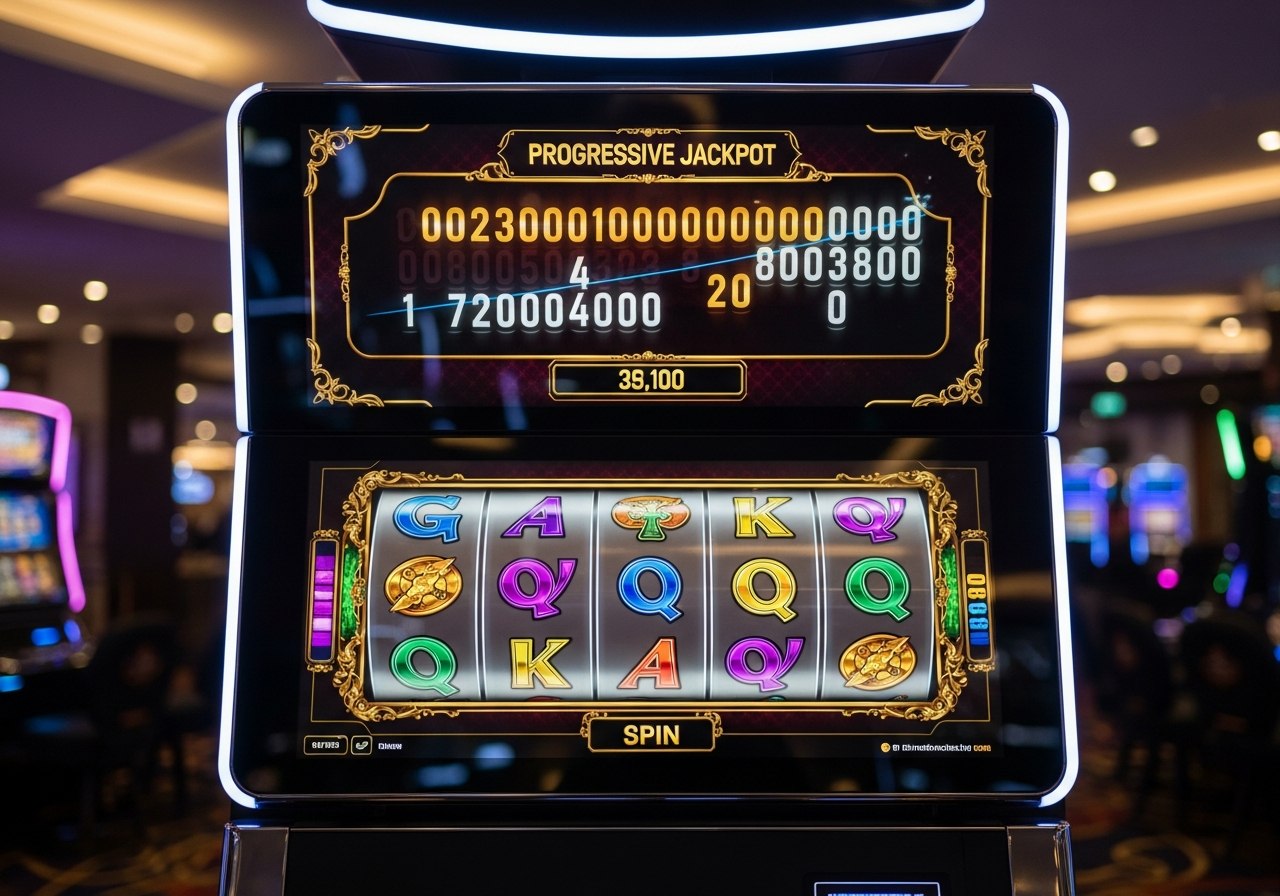
A progressive jackpot is a prize pool that grows with every bet placed on a slot machine until one lucky player hits the winning combination. For players in Ghana exploring online slots and land-based casinos, understanding the true odds of these life-changing wins is essential. Progressive jackpots are thrilling, but they are also rare and unpredictable events governed by mathematical probabilities, not myths or timing tricks.
This guide breaks down the key factors that shape your chances: return-to-player percentages, random number generation, jackpot network type, bet size requirements, payline structures, and trigger mechanisms. Whether you’re spinning from Accra or Kumasi, knowing how progressive slots really work helps you play smarter, set realistic expectations, and choose games that match your budget and goals.
What Progressive Jackpots Are and How They Work
A progressive jackpot is a prize that increases incrementally as players wager on a slot machine or network of machines. Each bet contributes a small percentage to the jackpot pool, which continues to grow until a player triggers the winning combination. Once won, the jackpot resets to a predetermined base amount—often called the seed—and begins climbing again.
The contribution rate varies by game, typically ranging from one to five percent of each wager. This means that every spin across all connected machines feeds the same prize pool, allowing the jackpot to reach substantial sums over time. Reset behavior is automatic: the moment a jackpot is hit, the game’s software immediately returns the prize to its starting value and resumes accumulation.
Progressive jackpots rely on three core components: the contribution mechanism that channels wagers into the pool, the trigger condition that determines how the jackpot is won, and the reset protocol that governs prize renewal. Together, these elements create a cycle of growth, payout, and renewal that defines the progressive slot experience.
| Component | How it works | Impact on odds |
|---|---|---|
| Contribution rate | A percentage of each bet feeds the jackpot pool | Higher rates grow the prize faster but do not change hit probability |
| Jackpot pool | Accumulates wagers until the trigger condition is met | Larger pools typically indicate longer time since last win, not better odds |
| Trigger condition | Defines the winning event: symbol match, bonus round, or random activation | Directly determines the mathematical probability of winning |
| Reset mechanism | Returns the jackpot to a base seed value after a win | Does not affect odds; each spin remains independent |
| Network type | Standalone, local, or wide-area networks determine pool size and reach | Networked jackpots grow larger but are harder to win |
Progressive jackpot mechanics in simple terms
Every time you spin a progressive slot, a small portion of your wager is added to the jackpot total. This contribution continues across all players and all spins until someone hits the jackpot. The prize display updates in real time, showing the current value as it climbs.
When the jackpot is won, the game software instantly resets the prize to its seed amount—typically a fixed starting value set by the game developer. For example, a jackpot that resets to $10,000 will begin accumulating again from that base, growing with each subsequent bet. This cycle repeats indefinitely, ensuring that the jackpot is always active and available to win.
Reset behavior is automatic and immediate. There is no waiting period, manual intervention, or cooldown. The moment the jackpot is paid out, the next spin can begin contributing to the new prize pool.
Why progressive jackpots are different from regular slot wins
Standard slot payouts occur frequently and are determined by fixed paytables. A three-symbol match might pay 10 times your bet, and these wins happen on a regular basis according to the game’s hit frequency. Progressive jackpots, by contrast, are rare events with extremely low probabilities, often measured in millions of spins.
The prize size is also vastly different. Regular wins are capped by the paytable and your bet size, while progressive jackpots can reach hundreds of thousands or even millions of currency units. This difference in scale reflects the difference in odds: frequent small wins versus infrequent massive payouts.
Hit rate—the percentage of spins that result in any win—remains consistent for base game symbols, but the jackpot trigger is an independent event with its own separate probability. You can experience regular slot wins without ever coming close to a jackpot, because the two outcomes operate on entirely different scales.
The Real Odds of Hitting a Progressive Jackpot
Progressive jackpot odds are rarely disclosed by game developers, but they are known to vary significantly depending on the slot’s design, the size of the prize pool, and the type of network. A standalone progressive might offer odds of one in 50,000 spins, while a wide-area networked jackpot like Mega Moolah can have odds exceeding one in 50 million.
These probabilities are built into the game’s software and are fixed at the design stage. The jackpot size does not alter the odds on a spin-by-spin basis, but larger jackpots typically reflect longer periods without a win, which means more players and more spins have contributed to the pool. The mathematical chance of winning remains constant for each individual spin.
Unlike lottery draws or card games, slot machine odds are proprietary and not always published. Players must rely on game rules, provider reputation, and casino transparency to understand what they are playing. Some jurisdictions require disclosure of key probabilities, but Ghana’s regulatory environment does not mandate such detail for all operators.
| Factor | What it affects | What players should expect |
|---|---|---|
| Game design | Trigger mechanism, reel configuration, and symbol distribution | Odds are determined at development and do not change during play |
| Jackpot network size | Number of machines or players contributing to the pool | Larger networks mean bigger prizes but lower individual win probability |
| Current jackpot value | Indicates time since last win, not likelihood of next win | A high jackpot does not mean it is “due”; each spin is independent |
| Bet size | May determine eligibility or proportional entry into jackpot draw | Check game rules; some slots require max bet for jackpot access |
Why exact jackpot odds usually vary by game
Each progressive slot is designed with a unique reel layout, symbol set, and trigger condition. A five-reel game with 243 ways to win will have different jackpot odds than a three-reel classic with a single payline, even if both offer progressive prizes. The mathematical probability is a function of the game’s architecture.
Developers balance jackpot frequency against prize size to create appealing gameplay. A game that awards smaller jackpots more often will have better odds than one targeting multi-million payouts. This design choice is intentional and reflects the target audience and market positioning of the slot.
Because odds are proprietary, players cannot compare them directly without access to game documentation or regulatory filings. The best approach is to focus on game type, network size, and published RTP figures as indirect indicators of jackpot accessibility.
RTP, RNG, and Why They Matter
Return to Player (RTP) is a long-term statistical measure expressing the percentage of total wagers a slot machine returns to players over millions of spins. A 96% RTP means that, on average, the game pays back 96 units for every 100 wagered. RTP includes all wins—base game, bonus features, and jackpots—but it does not predict short-term results or individual session outcomes.
Random Number Generation (RNG) is the software mechanism that determines the outcome of every spin. Certified RNGs ensure that each result is independent, unpredictable, and fair. For progressive jackpots, the RNG governs both base game symbols and the jackpot trigger, ensuring that no external factor—time of day, previous wins, or bet history—can influence the result.
- RTP reflects overall game performance, not the probability of hitting a jackpot on any single spin.
- Progressive contributions reduce base RTP; a portion of each bet funds the jackpot rather than immediate payouts.
- RNG certification by independent labs (eCOGRA, iTech Labs, GLI) confirms that outcomes are random and unbiased.
- Volatility and RTP are separate; high RTP does not mean frequent wins, and low volatility does not improve jackpot odds.
- Jackpot prizes are part of the RTP calculation, but because they are so rare, their impact on your session is negligible.
RTP is not the same as jackpot odds
Many players mistakenly believe that a high RTP slot offers better chances of hitting the jackpot. In reality, RTP measures the total return across all possible outcomes, weighted by their probabilities. A game with a 96% RTP might pay the jackpot once in 10 million spins, while delivering smaller wins frequently enough to achieve its overall return percentage.
The jackpot contribution rate—typically one to five percent of each bet—lowers the RTP available for base game payouts. This is why progressive slots often have slightly lower RTPs than non-progressive games. The difference is redirected into the growing prize pool.
Players should view RTP as a measure of long-term value, not a predictor of jackpot success. A slot with 94% RTP and a massive progressive can be more appealing than a 97% RTP game with no jackpot, depending on your goals and risk tolerance.
RNG and randomness in jackpot triggering
The RNG generates thousands of number sequences per second, even when the machine is idle. When you press spin, the RNG selects the current sequence, which maps to specific reel positions and outcomes. For progressive jackpots, the RNG determines both whether the trigger condition is met and, in some games, which tier of jackpot is awarded.
Randomness means that past spins have no influence on future results. A machine that just paid a jackpot has the same probability of paying again on the very next spin. Conversely, a slot that has not hit in months is not “due”—the odds remain constant.
Certified RNGs are tested for statistical randomness, ensuring that no patterns, cycles, or predictable sequences exist. For players in Ghana, choosing casinos that display RNG certification from recognized testing agencies is a key step in ensuring fair play.
Standalone vs Networked Progressive Jackpots
Progressive jackpots are categorized by how the prize pool is funded and shared. Standalone progressives are tied to a single machine, with only that machine’s wagers contributing to the jackpot. Local area progressives link multiple machines within one casino or operator, pooling contributions across a limited network. Wide-area networked progressives connect machines across multiple casinos, operators, or even countries, creating the largest prize pools but also the longest odds.
The type of jackpot directly influences both the size of the prize and the frequency of wins. Standalone jackpots reset quickly and are won more often, making them accessible to players with modest budgets. Networked jackpots grow to life-changing sums but require patience, persistence, and a tolerance for long losing streaks.
| Jackpot type | How it grows | Typical size | Relative hit frequency |
|---|---|---|---|
| Standalone | Single machine only | Hundreds to low thousands | Most frequent; weeks to months between wins |
| Local area | Multiple machines in one casino or network | Thousands to tens of thousands | Moderate; months between wins |
| Wide-area network | Machines across many casinos, regions, or countries | Hundreds of thousands to millions | Rare; several months to years between wins |
| Must-hit-by | Guaranteed to trigger before reaching a set cap | Variable, depends on cap setting | More predictable; frequency tied to cap proximity |
Which jackpot type usually offers better odds
Standalone progressives offer the best odds for players seeking regular jackpot action. Because only one machine contributes, the prize grows slowly and resets frequently, making wins more common. Local area jackpots strike a balance, offering mid-sized prizes with moderate frequency.
Wide-area networked progressives deliver the largest prizes but have the longest odds. Games like Mega Moolah and Mega Fortune pool contributions from thousands of players worldwide, creating multi-million payouts but odds that can exceed one in 50 million spins. For most players, the appeal is the dream of a life-changing win rather than a realistic expectation of success.
Must-hit-by jackpots are a special category that guarantees a win before the prize reaches a predetermined cap. As the jackpot approaches the cap, the odds of triggering improve slightly, making these games attractive to value-seeking players. However, competition increases as the cap nears, and the expected value remains consistent over time.
Bet Size, Max Bet Rules, and Eligibility
Many progressive slots impose conditions on jackpot eligibility, most commonly requiring a maximum bet to qualify for the top prize. This rule ensures that the jackpot pool grows at a consistent rate and prevents players from making minimal wagers while competing for large payouts. Understanding these requirements before you spin is essential to avoid disappointment.
Not all progressives enforce max bet rules. Some games grant jackpot access at any bet level, while others use proportional entry: higher bets increase your chances of triggering the jackpot, but all players remain eligible. The only way to know for certain is to consult the game’s paytable and rules screen.
- Check the game’s paytable before placing your first bet to confirm whether jackpot eligibility requires a maximum wager.
- Set your bet level according to your bankroll and the game’s minimum requirements; never bet more than you can afford to lose.
- Understand proportional entry rules if the game offers tiered jackpot access based on bet size; higher stakes may improve odds without being mandatory.
- Verify payline activation in older or classic progressive slots, where inactive paylines can disqualify jackpot-winning combinations.
- Review bonus feature requirements if the jackpot is only accessible through a special bonus round or symbol combination.
When max bet matters and when it does not
Max bet requirements are most common in older three-reel progressives and wide-area networked jackpots. These games often display a notice such as “Max bet required to win jackpot” on the paytable or loading screen. If you play below the maximum, you remain eligible for all other payouts but forfeit any chance at the progressive prize.
Modern video slots and must-hit-by progressives typically do not enforce max bet rules. Instead, they grant jackpot access at all bet levels, with some games offering proportional entry: higher bets yield more frequent entries into the jackpot draw. This model is more accessible to casual players and those with smaller bankrolls.
Players in Ghana should always confirm the rules before committing to a game. A slot that looks appealing may become unaffordable if it requires a maximum bet of 10 or 20 cedis per spin to qualify for the jackpot.
What to check in the game rules before playing
Every reputable slot includes a detailed rules screen accessible from the main game interface. This screen outlines paylines, symbol values, bonus features, and jackpot conditions. For progressive slots, pay special attention to the jackpot eligibility section, which specifies bet requirements, trigger mechanisms, and any restrictions.
Payline configuration matters in older slots, where you must activate all lines to be eligible for the jackpot. Symbol combinations are also critical: some games require a specific sequence on a specific payline, while others award the jackpot for landing a bonus symbol anywhere on the reels.
Jackpot-trigger rules define how the prize is won—whether through a symbol match, bonus round entry, or random activation during any spin. Understanding this mechanism helps set expectations and informs your betting strategy. If the rules are unclear or absent, consider choosing a different game or contacting casino support for clarification.
How Jackpot Size Changes the Odds
There is an inverse relationship between jackpot size and hit frequency. Smaller progressive prizes are designed to be won more often, providing players with a realistic chance of success within a reasonable number of spins. Larger jackpots, by contrast, are engineered to be rare events, with odds that can stretch into tens of millions of spins.
This design principle reflects the economics of progressive slots. A standalone machine with a 5,000-unit jackpot can afford to pay out weekly, because the prize resets quickly and the contribution rate keeps pace with wins. A networked game offering a million-unit jackpot must balance prize size against sustainability, resulting in extremely long odds but correspondingly massive payouts.
| Jackpot size | Typical hit frequency | Player implication |
|---|---|---|
| Small (hundreds to low thousands) | Weeks to a few months | Accessible for casual players; realistic win potential with moderate play |
| Medium (tens of thousands) | Several months | Requires patience and consistent play; still within reach of dedicated players |
| Large (hundreds of thousands to millions) | Many months to years | Extremely rare; best approached as entertainment rather than a realistic goal |
Why bigger jackpots are usually harder to hit
Game developers calibrate jackpot odds to match the prize size and ensure long-term sustainability. A million-unit jackpot cannot be won as frequently as a thousand-unit prize without bankrupting the operator or requiring unsustainably high contribution rates. The result is that big jackpots come with long odds by design.
Player psychology also plays a role. Large jackpots attract more players, increasing the total number of spins and accelerating prize growth. While this creates impressive headline figures, it does not improve any individual player’s odds. Each spin retains the same fixed probability regardless of how many players are competing.
For players in Ghana, this trade-off is important. Chasing a multi-million jackpot can be thrilling, but the odds are comparable to winning a national lottery. Smaller progressives offer a better balance of prize size and achievable probability, making them a smarter choice for players seeking a realistic chance of success.
Common Trigger Types: Symbol, Bonus, Random, and Mystery
Progressive jackpots are triggered in several ways, each with distinct gameplay implications. Symbol-based triggers require landing a specific combination—such as five jackpot symbols on a payline—to win the prize. Bonus-triggered jackpots activate when you enter a special feature, where you might spin a wheel, pick from objects, or play a mini-game to determine the prize tier.
Random triggers can occur on any spin, regardless of the symbols that land. These are often perceived as the fairest and most exciting, because every spin has an equal chance of awarding the jackpot. Mystery jackpots are a variant of random triggers, where the prize is guaranteed to be won before reaching a hidden or disclosed cap, adding an element of anticipation as the jackpot grows.
- Symbol-based triggers require specific reel outcomes, making them less frequent but more predictable.
- Bonus-triggered jackpots combine base game play with feature rounds, adding layers of engagement.
- Random triggers can happen on any spin, creating constant excitement but no control over timing.
- Mystery jackpots must hit by a certain value, increasing anticipation as the cap approaches.
- Tiered jackpots offer multiple prize levels (Mini, Minor, Major, Grand), each with different trigger conditions and odds.
How each trigger style works
Symbol-based triggers are the most traditional method. You must land a specific combination of jackpot symbols—often five in a row on an active payline—to claim the prize. This method is common in classic three-reel progressives and some video slots with straightforward mechanics.
Bonus-triggered jackpots require you to enter a special feature, typically by landing three or more scatter symbols. Once inside the bonus round, you might spin a prize wheel divided into segments representing different jackpot tiers, or pick from a grid of hidden prizes. The outcome is still determined by the RNG, but the presentation adds drama and interaction.
Random triggers occur independently of the symbols on the reels. The RNG selects a spin at random to award the jackpot, meaning you can win without any special combination or bonus activation. Mystery jackpots are random triggers with a twist: the game developer sets a cap, and the jackpot must be won before it reaches that value, providing a degree of predictability as the prize approaches the threshold.
Which trigger types feel more frequent to players
Bonus-triggered jackpots often feel more frequent because players regularly enter the bonus round, even if they do not win the jackpot. This creates a sense of progress and opportunity. Random triggers, by contrast, can feel unpredictable and out of reach, because there is no visual cue or near-miss indicator to suggest a jackpot is approaching.
Symbol-based triggers produce the most near-miss moments, when you land four jackpot symbols and miss the fifth by one position. These near-misses are not indicative of actual odds—they are part of the game’s design—but they create a perception of being “close” to winning, which can feel more engaging than a purely random system.
Mystery jackpots generate anticipation as the prize nears its cap, because players know the win is imminent. This can attract more players and increase competition, but it also provides a clear end point that other trigger types lack. For players in Ghana, understanding these psychological dynamics helps manage expectations and maintain responsible play habits.
Practical Player Strategy in Ghana
Playing progressive slots should be approached as entertainment, not a guaranteed income source. The odds are long, the outcomes are random, and no strategy can alter the mathematical probabilities built into the game. However, players can make smarter choices by setting budgets, understanding game rules, and selecting licensed operators that offer fair play and transparent terms.
Bankroll management is the foundation of responsible gambling. Decide in advance how much you can afford to lose, and never chase losses by increasing your bet size or extending your session beyond your limit. Progressive jackpots are rare events; most sessions will end without a jackpot win, so treat any jackpot as a bonus rather than an expectation.
| Approach | Advantage | Limitation |
|---|---|---|
| Set a fixed budget before playing | Protects your finances and prevents chasing losses | Does not improve odds or guarantee any outcome |
| Choose licensed casinos with certified RNGs | Ensures fair play and reliable payout processes | Licensing does not change the inherent odds of the game |
| Read game rules and paytables carefully | Avoids surprises about bet requirements and trigger conditions | Rules do not reveal exact jackpot probabilities |
| Play standalone or local progressives for better frequency | Higher hit rates and smaller prizes offer realistic win potential | Prize size is lower than wide-area networked jackpots |
| Treat jackpots as entertainment, not investment | Maintains healthy expectations and reduces risk of problem gambling | May feel less exciting if you are hoping for life-changing wins |
What players can do to make smarter choices
Start by selecting a casino with a valid license from a recognized authority, such as the Gaming Commission of Ghana or international regulators like the Malta Gaming Authority or UK Gambling Commission. Licensed operators are required to use certified RNG software, publish payout percentages, and adhere to responsible gambling standards.
Before you deposit, verify that the casino supports payment methods convenient for Ghanaian players, such as mobile money (MTN, Vodafone, AirtelTigo), bank transfers, or e-wallets. Confirm that withdrawals are processed reliably and that customer support is accessible in case of disputes or technical issues.
Discipline is the most important strategy. Decide how much you will spend, how long you will play, and what your exit conditions are—whether that is hitting a loss limit, reaching a time target, or securing a satisfying win. Stick to these limits regardless of how the session unfolds, and never gamble with money you cannot afford to lose.
Ghana-Specific Considerations for Jackpot Slot Players
Ghana’s online and land-based casino markets are growing, but players must navigate a mix of licensed operators and unregulated platforms. The Gaming Commission of Ghana oversees legal gambling activities, and choosing a licensed operator is the first step toward safe and fair play. Mobile play dominates the market, with most Ghanaians accessing slots via smartphones, so mobile compatibility and data efficiency are key considerations.
Currency support is another practical factor. Some international casinos accept Ghanaian cedis, while others require deposits in US dollars or euros, which may incur conversion fees. Mobile money integration is the most convenient payment method for many players, offering instant deposits and familiar transaction flows.
- Verify that the casino holds a valid license from the Gaming Commission of Ghana or a reputable international authority.
- Check currency options to avoid unfavorable exchange rates or unnecessary conversion fees.
- Ensure mobile compatibility if you plan to play on a smartphone; look for responsive sites or dedicated apps.
- Confirm payment method availability, especially mobile money options like MTN Mobile Money or Vodafone Cash.
- Review provider reputation by choosing slots from established developers like NetEnt, Microgaming, or Pragmatic Play.
What to verify before playing from Ghana
Licensing is the most critical verification step. A legitimate casino will display its license number and regulator on its homepage or terms page. If this information is missing or difficult to find, consider it a red flag and choose a different operator.
Currency and payment methods should align with your preferences. If the casino does not accept cedis, confirm the exchange rate and any fees applied to deposits and withdrawals. Mobile money is the most convenient option for most Ghanaian players, but not all international casinos support it, so verify this before creating an account.
Provider reputation matters because established developers are held to higher standards of fairness and transparency. Games from licensed studios undergo regular testing and certification, ensuring that RNGs are truly random and that published RTPs are accurate. Avoid casinos offering games from unknown or unverified providers, as these may not meet international fairness standards.
Myths, Limits, and Realistic Expectations
Progressive jackpots are surrounded by myths that can mislead players into making poor decisions. The most persistent myth is that a jackpot is “due” to hit after a long period without a win. In reality, each spin is independent, and past results have no influence on future outcomes. A slot that has not paid in months has the same probability of paying on the next spin as one that just awarded a jackpot.
Another common misconception is that playing at certain times of day—such as late at night or during off-peak hours—improves your odds. RNG software operates continuously and independently of time, player volume, or casino activity. There is no favorable time to play, and no pattern or timing strategy can alter the odds.
Realistic expectations are essential for responsible gambling. Progressive jackpots are entertainment, not a reliable path to wealth. The vast majority of players will never hit a major jackpot, and the odds reflect this reality. Approach progressive slots with the understanding that you are paying for the experience and the thrill of possibility, not for a guaranteed return.
What not to believe about progressive jackpots
Do not believe that a machine that has not paid recently is “hot” or “due” for a win. Each spin is an independent event, and the machine has no memory of past outcomes. The same applies to machines that have just paid: they are not “cold” or less likely to pay again soon.
Avoid the myth that max bet increases your odds beyond the eligibility requirement. If the game grants jackpot access at max bet, playing above that level does not improve your chances unless the game explicitly uses proportional entry. Check the rules to understand the exact relationship between bet size and jackpot probability.
Do not assume that a high RTP means you are more likely to win the jackpot. RTP measures overall return across all outcomes, not the probability of rare events like jackpots. A 96% RTP slot can have a one-in-a-million jackpot trigger rate, and that figure tells you nothing about when or whether you will hit it.