
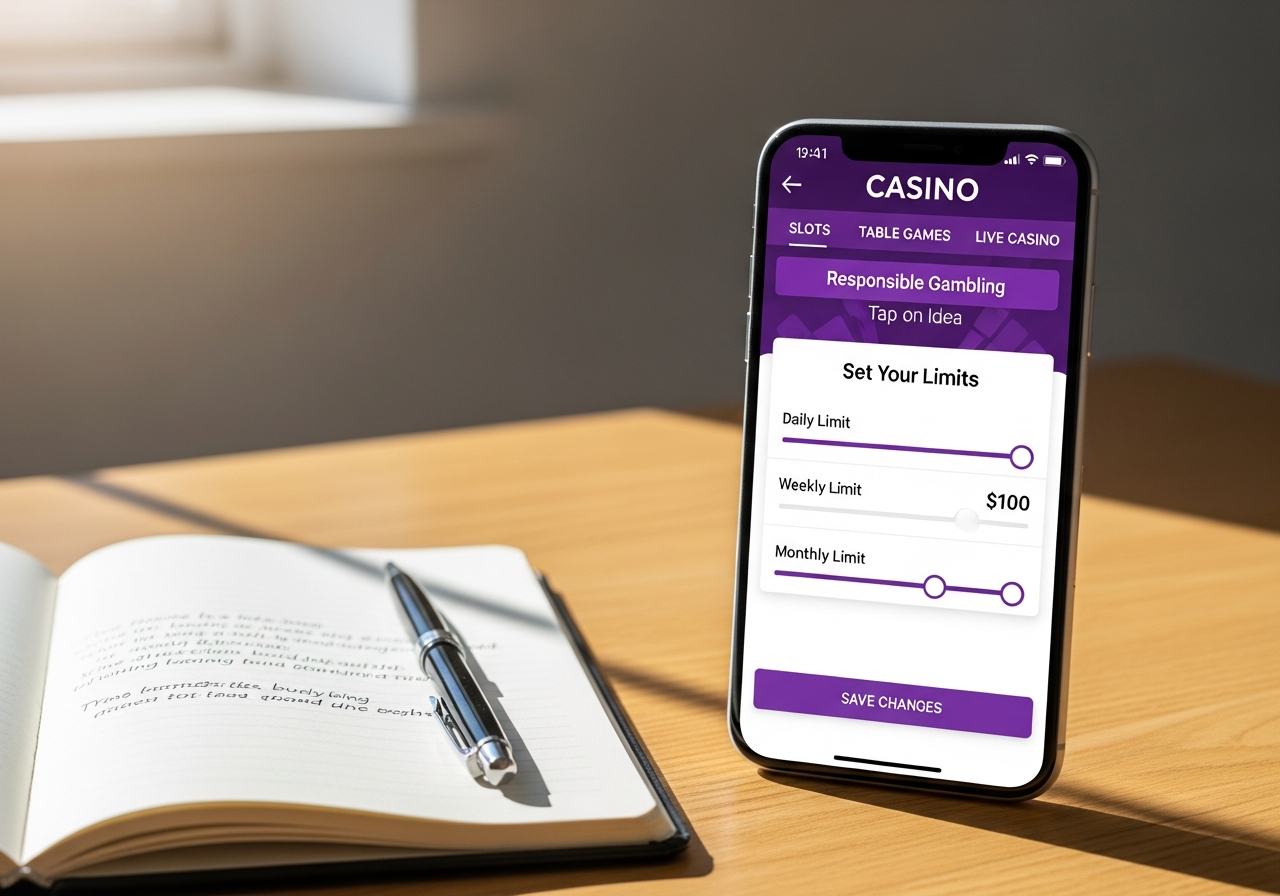
Deposit limits are financial controls that allow players to cap the amount they can transfer into their casino account over a fixed period—typically daily, weekly, or monthly. These tools are central to responsible gambling frameworks worldwide, yet many casinos in Ghana operate without robust, enforced limit-setting mechanisms. As mobile and online casinos grow rapidly across the country, practical guidance is urgently needed for both players seeking safer play and operators striving to meet emerging compliance standards.
This article provides a dual-audience guide to deposit limits in the Ghana casino context. It covers how limits function, why they are the first line of defense against problem gambling, and how to implement them effectively. We will explore player control tools, operator responsibilities, and the policy gaps that make Ghana-specific harm-reduction strategies essential.
What Deposit Limits Are and How They Work in Casinos
Deposit limits prevent players from funding their accounts beyond a set threshold within a given timeframe. A player might set a daily cap of GH₵50, a weekly limit of GH₵200, or a monthly maximum of GH₵500. Once reached, the system blocks further deposits until the period resets. These controls apply before any wagering occurs, making them a preventive tool rather than a reactive measure.
Casinos typically allow players to lower limits immediately but impose waiting periods—often 24 to 72 hours—before increases take effect. This cooling-off design reduces impulsive decisions driven by chasing losses or the excitement of a win streak. For casual players in Ghana, a weekly limit aligned with disposable income offers a practical balance between entertainment and financial safety.
Deposit limits differ from loss limits, wager caps, and session timers in both scope and application. The table below compares deposit limits with other common player-control tools, highlighting their unique role in responsible gambling ecosystems.
| Tool | What it controls | Typical timing | Responsible gambling benefit |
|---|---|---|---|
| Deposit limit | Funds entering account | Daily, weekly, monthly | Prevents overspending before play begins |
| Loss limit | Net losses (deposits minus withdrawals) | Daily, weekly, monthly | Stops play once losses reach threshold |
| Wager limit | Total amount staked | Per session or period | Reduces intensity and velocity of betting |
| Session timer | Time spent gambling | Per session | Encourages breaks and self-awareness |
| Self-exclusion | All account activity | Fixed period (e.g., 6 months to lifetime) | Complete break for high-risk players |
Deposit Limits vs. Other Player-Control Tools
Deposit limits act as the first line of defense because they intervene before money is at risk. Loss limits, by contrast, track net losses after wagering, meaning funds have already been spent. Wager limits control the total amount staked but do not prevent a player from depositing more money to continue play. Session timers address duration but not expenditure, which can still escalate rapidly within a short period.
Self-exclusion is the most restrictive tool, blocking all account access for a set duration. It is best suited for players who recognize severe gambling harm and need a complete break. Deposit limits, however, allow continued participation within safe financial boundaries, making them accessible to a wider range of users.
For casual players in Ghana’s growing casino market, deposit limits offer an approachable entry point to safer gambling. They require no acknowledgment of a problem and can be set proactively as part of normal account management, reducing stigma and encouraging widespread adoption.
Why Deposit Limits Matter for Gambling Harm Reduction
Compulsive spending often escalates when players chase losses or overestimate their ability to win back funds. Deposit limits create a hard ceiling that cannot be bypassed in the heat of the moment, preventing the cycle of reloading accounts repeatedly during a losing streak.
By aligning deposit caps with personal budgets, players transform gambling from an uncontrolled expense into a planned form of entertainment. This shift supports safer play by ensuring that gambling funds come from disposable income rather than money earmarked for rent, food, or school fees.
Research on gambling harm consistently shows that early intervention tools—especially those that control access to funds—are more effective than post-loss measures. Deposit limits stop problems before they begin, making them a cornerstone of any responsible gambling strategy.
Why Ghana Casinos Need Stronger Deposit Limit Policies
Ghana’s casino sector has expanded rapidly, driven by mobile technology and the proliferation of online platforms. Yet regulatory frameworks have not kept pace with this growth, leaving many operators without mandatory harm-prevention standards. While gambling is often framed as entertainment, the absence of enforced deposit limits and other safeguards creates significant gaps in consumer protection.
The country’s economic realities—relatively low median incomes, high mobile penetration, and limited financial literacy—make players particularly vulnerable to overspending. Without clear policies requiring deposit limits, casinos may prioritize revenue generation over player welfare, inadvertently fostering problem gambling.
International best practices show that mandatory deposit limits, combined with affordability checks and cooling-off periods, reduce gambling-related harm. Ghana’s casinos need policy reform that balances commercial viability with public health, ensuring that entertainment does not come at the cost of financial ruin for vulnerable players.
Regulatory and Consumer-Protection Gaps in Ghana
Current gambling regulation in Ghana focuses primarily on licensing and taxation rather than player protection mechanisms. Few operators are required to offer deposit limits, and even fewer enforce cooling-off periods or affordability assessments. This creates a fragmented landscape where harm-reduction tools depend on voluntary compliance rather than legal obligation.
Consumer-protection gaps are evident in the lack of standardized limit-setting interfaces and inconsistent application of delay rules when players attempt to increase their caps. Some platforms allow instant limit raises, undermining the protective intent of the tool. Others lack mobile-friendly access, a critical issue in a market where most players use smartphones exclusively.
Policy improvements should include mandatory deposit limit features on all licensed platforms, minimum cooling-off periods of 24 to 72 hours for limit increases, and periodic affordability checks for high-value depositors. Transparency requirements—such as displaying current limits on every deposit screen—would further strengthen player awareness and control.
Analytical reviews of harm-minimization frameworks in jurisdictions like the UK and Australia provide models that Ghana can adapt. These include real-time transaction monitoring, cross-operator limit sharing to prevent players from circumventing caps by opening multiple accounts, and staff training to recognize and respond to problem gambling indicators.
How to Set a Deposit Limit Step by Step
Setting a deposit limit is a straightforward process, but the steps vary depending on whether you use a mobile app, desktop site, or require assistance from customer support. The following procedure applies to most Ghana-based casinos and can be completed in under five minutes.
Before choosing your limit amount, calculate your disposable income—money left after covering rent, food, transport, utilities, and savings. Never set a limit based on expected winnings, as gambling outcomes are unpredictable. Use only funds you can afford to lose without financial stress.
- Log in to your casino account via the mobile app or website.
- Navigate to account settings, often labeled “Responsible Gambling,” “My Limits,” or “Player Controls.”
- Select “Deposit Limit” from the available tools (you may also see loss limits, session timers, and self-exclusion options).
- Choose your timeframe—daily, weekly, or monthly—and enter your cap amount in Ghanaian cedis.
- Confirm the limit; it will take effect immediately if you are lowering it, or after a cooling-off period (typically 24–72 hours) if you are raising it.
- Check your email or SMS for confirmation and note the date when any pending increase will activate.
- Review and adjust your limit regularly based on changes in your financial situation.
Budget-First Method for Choosing a Limit
A budget-first approach ensures your deposit limit reflects your actual financial capacity rather than wishful thinking. Start by listing all monthly income sources and fixed expenses, then identify discretionary funds available for leisure activities.
The following tips help you set a realistic and sustainable limit:
- Allocate no more than 5–10% of discretionary income to gambling, ensuring other leisure activities remain funded.
- Favor weekly limits over daily ones if your income arrives irregularly, as this prevents overspending early in the month.
- Factor in mobile data costs for online play, as these add to the total expense of gambling.
- Set a lower limit initially and increase it only after several months of safe, controlled play.
- Involve a trusted friend or family member in your limit-setting decision for added accountability.
Where Players Usually Find the Setting
Most online and mobile casinos place deposit limit controls within the account settings menu, under a section labeled “Responsible Gambling,” “My Account,” or “Player Safety.” Some platforms integrate the tool into the cashier or deposit page, prompting you to set or review limits each time you add funds.
If you cannot locate the deposit limit feature, contact customer support via live chat, email, or phone. Reputable operators are required to assist with limit setting and should respond within 24 hours. Be wary of platforms that make it difficult to find or activate these controls, as this may indicate weak responsible gambling commitments.
When increasing a limit, expect a delay of 24 to 72 hours before the new cap takes effect. This cooling-off period is a harm-prevention measure designed to give you time to reconsider impulsive decisions. Decreases, however, apply immediately, allowing you to regain control without waiting.
Best Practices for Deposit Limit Design
Effective deposit limit systems combine technical features with behavioral design principles to maximize player protection. Operators should implement default limits for new accounts, require explicit opt-in for high caps, and use friction points—such as cooling-off periods—to slow escalation.
The table below outlines proven practices that enhance the protective impact of deposit limits while maintaining a fair user experience.
| Practice | Why it helps | Implementation note |
|---|---|---|
| Default limits for new accounts | Prevents high initial spending before player assesses risk | Set moderate caps (e.g., GH₵200/week) that can be adjusted after onboarding |
| Mandatory cooling-off for increases | Reduces impulsive limit raises during chasing behavior | Apply 24–72 hour delay before increases activate |
| Immediate decreases | Empowers players to regain control without delay | Allow reductions to take effect instantly |
| Affordability checks for high limits | Ensures caps align with player income | Request documentation for limits above GH₵1,000/month |
| Prominent limit visibility | Keeps spending awareness high during play | Display current limit and remaining balance on deposit screen |
| Limit-reached notifications | Provides clear stopping point and encourages reflection | Send push, SMS, or email alert when cap is hit |
Cooling-Off Periods and Delayed Limit Increases
Cooling-off periods introduce deliberate friction into the limit-increase process, creating space for second thoughts and reducing the influence of emotional decisions. A player who reaches their weekly limit during a losing streak may feel compelled to raise the cap immediately; a 48-hour delay forces a pause that often leads to reconsideration.
Timing rules should be clearly communicated at the point of change request, with countdown notifications reminding players when the increase will activate. This transparency builds trust and reinforces the protective intent of the delay. Operators can further enhance cooling-off effectiveness by pairing it with educational messages about chasing losses and budgeting.
International research shows that cooling-off periods reduce the frequency and size of limit increases, especially when combined with mandatory self-assessment prompts. Ghana casinos should adopt these evidence-based measures as standard practice to align with global harm-prevention standards.
Ghana Casino Operators: Compliance and Responsible Gambling Controls
Casino operators in Ghana bear legal and ethical responsibilities to protect players from gambling harm. Effective compliance requires more than offering deposit limits—it demands active enforcement, staff training, and integration of responsible gambling controls into every customer touchpoint.
Key operator duties include:
- Providing accessible, mobile-friendly tools for setting and adjusting deposit limits across all platforms.
- Enforcing cooling-off periods of at least 24 hours for limit increases, with no exceptions.
- Training customer support teams to recognize problem gambling indicators and refer players to help resources.
- Conducting periodic reviews of player accounts to identify high-risk behavior patterns.
- Implementing real-time transaction monitoring to flag unusual deposit spikes or rapid limit changes.
- Displaying responsible gambling information prominently on homepages, cashier pages, and marketing materials.
- Partnering with local counseling services and helplines to provide direct support pathways for at-risk players.
Operational Controls That Support Limit Setting
Behind effective deposit limits lies a suite of operational tools and processes that ensure compliance and player safety. These controls are often invisible to users but are critical to preventing system bypasses and maintaining data integrity.
- Automated transaction blocks that prevent deposits once the limit is reached, with clear on-screen messaging explaining the restriction.
- Audit trails that log all limit changes, including timestamps and IP addresses, for regulatory review.
- Cross-platform synchronization so that limits apply equally to mobile apps, desktop sites, and physical kiosks.
- Customer verification systems that detect and close duplicate accounts used to circumvent limits.
- Regular staff training on limit enforcement protocols and escalation procedures for distressed players.
Monitoring for Signs of Problem Gambling
Operators should use behavioral analytics to identify warning signs such as frequent limit increases, rapid deposit cycles, late-night gambling sessions, and attempts to bypass controls. When these patterns emerge, proactive intervention—such as mandatory cooling-off periods, account reviews, or outreach from support teams—can prevent escalation.
Early warning indicators include deposits that exceed expected income levels, repeated requests to raise limits within short intervals, and high-frequency play immediately after deposit. These signals suggest that gambling is becoming a priority over other financial obligations and merit a respectful, non-judgmental outreach from the operator.
Integrating these monitoring capabilities into responsible gambling policies demonstrates a commitment to player welfare that goes beyond regulatory minimums. It also protects operators from reputational and legal risks associated with problem gambling.
Comparing Deposit Limits with Other Safer Gambling Tools
Deposit limits are one component of a comprehensive safer gambling toolkit. Understanding how they compare to other controls helps players and operators choose the right combination of tools for different risk levels and play styles.
| Tool | Controls | Best use case | Limitations |
|---|---|---|---|
| Deposit limit | Funds entering account | Preventive control for all players | Does not limit play intensity if balance remains |
| Loss limit | Net losses over period | Players focused on loss management | Reactive—only activates after money is lost |
| Session timer | Time spent gambling | Reducing binge sessions | Does not control spending amount |
| Reality checks | Pop-up reminders of time and spend | Maintaining awareness during play | Easily dismissed without action |
| Self-exclusion | All account activity | Severe problem gambling | Cannot be reversed during exclusion period |
Which Tool Works First for Which Player Risk Level
For low-risk players who gamble occasionally for entertainment, deposit limits combined with session timers provide sufficient control. These tools maintain awareness and prevent overspending without imposing heavy restrictions. Setting a modest weekly deposit cap and a 90-minute session timer creates healthy boundaries that preserve the leisure aspect of gambling.
Moderate-risk players—those who occasionally exceed budgets or chase losses—benefit from deposit limits paired with loss limits and reality checks. This combination adds layers of protection, stopping play when losses reach predetermined thresholds and prompting reflection during extended sessions.
High-risk players exhibiting signs of problem gambling should consider self-exclusion or take-a-break options that block access for fixed periods. Deposit limits remain part of the toolkit but are often insufficient on their own for individuals experiencing severe harm. In these cases, immediate suspension of gambling activity and connection to professional support services are critical.
Deposit Limits and Personal Gambling Budgets
A deposit limit is most effective when it reflects a carefully planned personal budget rather than an arbitrary number. The process of budget-aligned limit setting forces players to confront the financial reality of their gambling and ensures that entertainment spending does not compromise essential needs.
Follow these steps to align your deposit limit with your financial capacity:
- Calculate total monthly income from all sources, including salary, business earnings, and side income.
- Subtract fixed expenses: rent, utilities, transport, groceries, insurance, debt payments, and savings contributions.
- Identify discretionary income—the amount remaining after fixed costs—and allocate no more than 5–10% to gambling.
- Divide the gambling allocation by four to set a realistic weekly deposit limit (or by 30 for a daily limit).
- Review and adjust the limit quarterly or whenever your income or expenses change significantly.
A Simple Budget Formula for Safer Play
A straightforward formula helps Ghana-based players set limits appropriate to their income level. Start with your monthly disposable income—money left after all essential expenses and savings. Multiply this figure by 0.05 to 0.10 to find a safe gambling budget that does not threaten financial stability.
For example, if your monthly disposable income is GH₵400, a safe gambling budget would be GH₵20 to GH₵40 per month, or GH₵5 to GH₵10 per week. If your disposable income is zero or negative, your deposit limit should be zero—gambling is not a viable leisure option when basic needs are unmet.
Avoid using expected winnings or borrowed money to set your limit. Gambling outcomes are random, and betting on anticipated returns leads to chasing behavior and debt accumulation. Your limit should represent money you can afford to lose entirely without impacting your quality of life.
Warning Signs That a Limit Is Too High
Even with a deposit limit in place, players should watch for indicators that the cap is set too high relative to their financial situation. The following signs suggest that your limit needs immediate reduction:
- You regularly hit your limit and feel frustrated or anxious that you cannot deposit more.
- Essential expenses such as rent, food, or transport are delayed or skipped to accommodate gambling spending.
- You borrow money from friends, family, or lenders to cover non-gambling costs after reaching your deposit limit.
- You experience stress, guilt, or shame related to the amount you spend on gambling.
- Your savings account balance is declining or you have stopped contributing to savings altogether.
- You find yourself planning your budget around your deposit limit rather than treating gambling as optional entertainment.
Technology and UX Features That Improve Limit Use
User experience design plays a critical role in the effectiveness of deposit limits. Platforms that make limits easy to set, visible during play, and supported by timely notifications see higher adoption rates and better harm-prevention outcomes than those with buried or confusing controls.
| Feature | User benefit | Risk-reduction impact |
|---|---|---|
| One-tap limit access | Quick setting without navigation complexity | Increases voluntary adoption |
| On-screen balance display | Constant awareness of remaining limit | Prevents surprise limit-reached moments |
| Push notifications | Alerts at 50%, 80%, and 100% of limit | Encourages pause and reflection |
| Mobile-first design | Accessible on primary device for Ghana users | Ensures no platform gap in protection |
| Clear cooling-off countdown | Transparent timing for limit increases | Reduces frustration and impulsive behavior |
| Email and SMS confirmations | Provides record of all limit changes | Detects unauthorized changes quickly |
Notifications, Reminders, and Visibility of Current Limits
Real-time notifications serve as decision-support tools, giving players critical information at moments when spending control is most needed. A well-timed alert at 80% of a weekly deposit limit can prompt a player to slow down or stop, preventing the regret that often follows hitting the cap during a losing streak.
Visibility is equally important. Displaying the current limit and remaining balance prominently on deposit screens, account dashboards, and in-game interfaces keeps spending top of mind. This constant awareness counteracts the immersive design of casino games, which can obscure the passage of time and money.
Operators should also send periodic summaries—weekly or monthly emails showing total deposits, time played, and limit utilization—to support long-term awareness and encourage players to review and adjust their controls as needed.
What Responsible Gambling Content Should Say About Deposit Limits
Educational content about deposit limits must balance clarity with sensitivity. The goal is to inform and empower players without stigmatizing those who choose to gamble or those who struggle with control. Effective messaging uses neutral language, avoids promotional framing, and provides practical guidance that respects player autonomy.
Content should explain how deposit limits work, why they are useful, and how to set them—without implying that gambling itself is inherently problematic. The tone should be supportive rather than preachy, acknowledging that most players gamble recreationally and benefit from simple budgeting tools.
Transparency is key. Operators should clearly describe cooling-off periods, affordability checks, and limit-adjustment processes without burying information in fine print. Trust signals such as links to independent helplines, partnerships with counseling services, and certifications from responsible gambling organizations strengthen credibility.
Tone, Terminology, and Trust Signals
Neutral, straightforward language helps players understand controls without feeling judged. Avoid terms like “problem gambler” in general content; instead, use phrases like “safer gambling tools” and “player protection.” When discussing harm, frame it as a continuum rather than a binary state, recognizing that risk levels vary and change over time.
Trust signals include displaying regulatory licenses, linking to third-party responsible gambling organizations, and providing direct contact information for support services. Testimonials from players who successfully use deposit limits can humanize the tool and reduce perceived stigma.
Transparency about commercial interests—such as acknowledging that responsible gambling policies may reduce short-term revenue but align with long-term sustainability—builds trust and positions the operator as a partner in player welfare rather than solely a profit-driven entity.
Common Misconceptions to Correct
Educational content should address widespread myths that undermine effective use of deposit limits. Clear, concise corrections help players make informed decisions and avoid common pitfalls.
- Misconception: “Deposit limits are only for problem gamblers.” Reality: Limits are budgeting tools useful for all players, from casual to frequent.
- Misconception: “I can easily bypass limits by opening another account.” Reality: Licensed operators use verification systems to detect and close duplicate accounts.
- Misconception: “If I set a limit, I won’t be able to deposit enough to win big.” Reality: Limits protect your budget; gambling outcomes are random and unaffected by deposit size.
- Misconception: “Limits reduce my chances of recovering losses.” Reality: Chasing losses usually increases harm; limits help you stop before problems escalate.
- Misconception: “Once I set a limit, I can’t change it.” Reality: You can lower limits instantly; increases require a cooling-off period for safety.
Case for a Ghana-Specific Harm-Reduction Approach
Ghana’s unique economic, cultural, and technological context demands tailored harm-reduction strategies rather than one-size-fits-all policies imported from high-income countries. Median incomes are lower, mobile technology dominates access, and financial literacy varies widely, creating a distinct risk profile that generic deposit limit frameworks may not adequately address.
A Ghana-specific approach should incorporate affordability checks calibrated to local income levels, mandatory deposit limits set as a percentage of verified income, and educational campaigns delivered through mobile-first channels. Regulatory reforms should require transparent reporting of problem gambling indicators and regular audits of operator compliance with harm-prevention standards.
Public health framing—treating gambling harm as a preventable health issue rather than a moral failure—encourages policy action and reduces stigma. This perspective supports investment in player education, operator accountability, and community-level support services that complement individual controls like deposit limits.
Local Context: Income Pressure, Mobile Access, and Player Education
Ghana’s economy places many players under significant income pressure, making overspending on gambling particularly harmful. Essential expenses like rent, food, and healthcare consume a large share of household budgets, leaving limited room for discretionary spending. In this context, deposit limits must be conservative and enforced strictly to prevent financial distress.
Mobile access is the primary gateway to online casinos for most Ghanaian players, who rely on smartphones rather than desktop computers. This makes mobile-friendly limit-setting interfaces and push notification systems essential. Operators that prioritize desktop UX over mobile risk excluding the majority of their user base from effective harm-prevention tools.
Player education levels vary, with many users lacking detailed knowledge of how gambling odds work or how to manage entertainment budgets. Educational campaigns should use simple language, visual aids, and local languages to explain deposit limits and other controls. Partnerships with schools, community organizations, and media outlets can extend reach beyond casino platforms.
Region-specific policies should also address cross-platform gambling, where players use multiple operators to circumvent individual deposit limits. A national registry or shared limit system—similar to models in Scandinavia—would close this loophole and provide comprehensive protection across the Ghana casino market.
Practical Checklist for Players and Operators
Effective harm prevention requires action from both players and operators. The following checklists provide concrete steps for each group to implement and maintain deposit limit protections.
Player Checklist
Use these action items to set up and maintain effective deposit limits on your casino accounts:
- Calculate your monthly disposable income and allocate no more than 5–10% to gambling.
- Set a weekly or monthly deposit limit immediately after opening your account.
- Lower your limit if you notice signs of financial stress or find yourself frequently hitting the cap.
- Review your limit every three months and adjust based on changes in income or expenses.
- Enable push notifications to receive alerts at 50%, 80%, and 100% of your limit.
- Seek help from a counseling service if you feel unable to stay within your limit or experience distress related to gambling.
Operator Checklist
Casino operators should implement the following measures to ensure deposit limits provide meaningful protection:
- Offer deposit limit tools on all platforms (mobile app, desktop site, physical kiosk) with identical functionality.
- Set default limits for new accounts and require explicit opt-in for increases above moderate thresholds.
- Enforce a minimum 24-hour cooling-off period before any limit increase takes effect.
- Display current limits and remaining balances prominently on deposit screens and account dashboards.
- Send automated notifications at key limit thresholds (50%, 80%, 100%) via push, SMS, or email.
- Train customer support staff to assist with limit setting and recognize signs of problem gambling.
- Conduct regular audits of limit-setting processes and player behavior data to identify gaps in compliance or harm prevention.